✕
Ready to grow your bussiness?
Let's schedule a call to discuss your needs

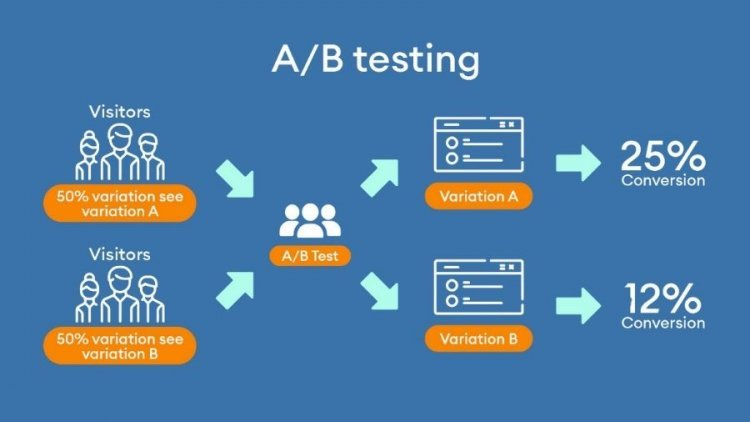
In the competitive world of online retail, every click, impression, and conversion matters. eCommerce businesses are constantly looking for ways to optimize their websites, improve customer experience, and increase sales. One of the most effective strategies to achieve this is A/B testing. By comparing two versions of a webpage, product listing, or checkout process, businesses can identify what resonates best with their audience and make data-driven decisions. For businesses aiming to scale efficiently, combining A/B testing with professional eCommerce services ensures that results are interpreted correctly and strategies are implemented effectively. This guide provides a step-by-step approach to conducting A/B testing in your eCommerce business.
A/B testing, also known as split testing, involves presenting two different versions (A and B) of a webpage or element to separate segments of your audience to determine which version performs better. The goal is to increase conversion rates, boost sales, or improve other key metrics like click-through rate (CTR), average order value (AOV), or engagement.
Examples of A/B testing elements in eCommerce include:
Product images
Call-to-action buttons
Checkout forms
Headlines and product descriptions
Pricing and promotional banners
Before running any A/B test, it is essential to define clear objectives. Ask yourself:
Are you aiming to increase product sales?
Do you want to reduce cart abandonment?
Are you trying to improve newsletter sign-ups?
A well-defined goal ensures you test the most relevant elements and measure results accurately. A Professional eCommerce account management services can help you identify high-impact goals and prioritize testing strategies based on your business metrics.
Once your goal is defined, choose the webpage or element that most directly impacts it. Common areas include:
Product pages – Images, descriptions, and reviews
Checkout process – Number of steps, form fields, and payment options
Call-to-action buttons – Text, color, size, or placement
Promotional banners – Headlines, visuals, or discount offers
The element you test should directly influence your conversion goals. Avoid testing multiple elements simultaneously unless you plan to run a multivariate test.
Design two variations for the element being tested:
Version A (Control): The original version currently on your site
Version B (Variant): A modified version with one change
For example, if you are testing a “Buy Now” button, Version A might be blue with white text, and Version B might be green with bold text. Keep variations simple to ensure you know exactly which change caused the result.
Divide your website visitors into two groups randomly to avoid bias:
Group A: Sees Version A (Control)
Group B: Sees Version B (Variant)
A proper split ensures reliable results. Tools like Google Optimize, Optimizely, or VWO can automate audience segmentation for accurate testing.
The test should run long enough to collect significant data but not so long that external factors influence results. The Key performance indicators (KPIs) to track include:
Conversion rate
Click-through rate
Average order value
Bounce rate
A Professional Amazone, meesho and flipkart account management services often provide analytics and insights to ensure the collected data is actionable and statistically significant.
After collecting enough data, compare the performance of Version A and Version B. Determine:
Which version achieved the goal better
Whether the difference is statistically significant
Insights into customer behavior
Tools often provide dashboards that visually display results, making it easier for teams to interpret outcomes and make informed decisions.
Once a winner is identified, implement the change across your website. The Continuous A/B testing ensures that your eCommerce platform evolves based on customer behavior rather than assumptions. Over time, these incremental improvements can lead to:
Higher sales
Improved user experience
Better customer retention
Enhanced ROI from marketing campaigns
Using eCommerce services ensures that these changes are deployed efficiently and tracked properly for maximum impact.
A/B testing is not a one-time activity. Consumer preferences, market trends, and seasonal factors change over time. Repeat tests regularly to:
Optimize product pages
Test new promotions
Enhance checkout flow
Adjust website design for improved engagement
Continuous testing keeps your online store competitive and ensures you’re always aligned with customer expectations.
Data-Driven Decisions: Remove guesswork from website optimization
Higher Conversions: Improve sales and average order value
Enhanced Customer Experience: Tailor your website to user preferences
Reduced Bounce Rate: Optimize engagement across pages
Better ROI on Marketing: Understand which campaigns or website changes deliver results
Combining these benefits with flipkart and amazone account management services ensures that testing is strategic, systematic, and aligned with your overall business goals.
A/B testing is an essential tool for eCommerce businesses that want to improve performance, understand customer behavior, and drive growth. By testing one element at a time, analyzing results, and implementing successful changes, you can continuously optimize your online store.
Partnering with Novel Web Solution takes the process to the next level, offering expertise in planning, execution, and analysis, ensuring your testing efforts translate into measurable business results.
For any eCommerce business looking to stay competitive, A/B testing isn’t optional—it’s a must for long-term growth and sustained success.
Get the right guidance with a dedicated strategist by your side — every step of the way.